Engineering airframes where every gram, every dollar, and every geometry decision has to earn its place.
A Structure Under Three Constraints at Once
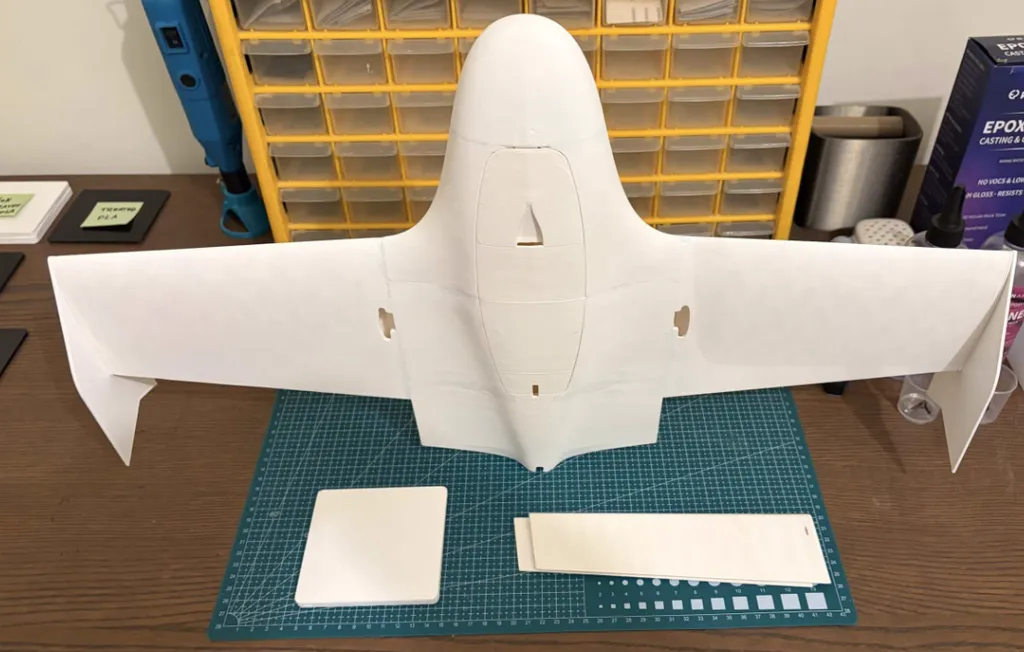
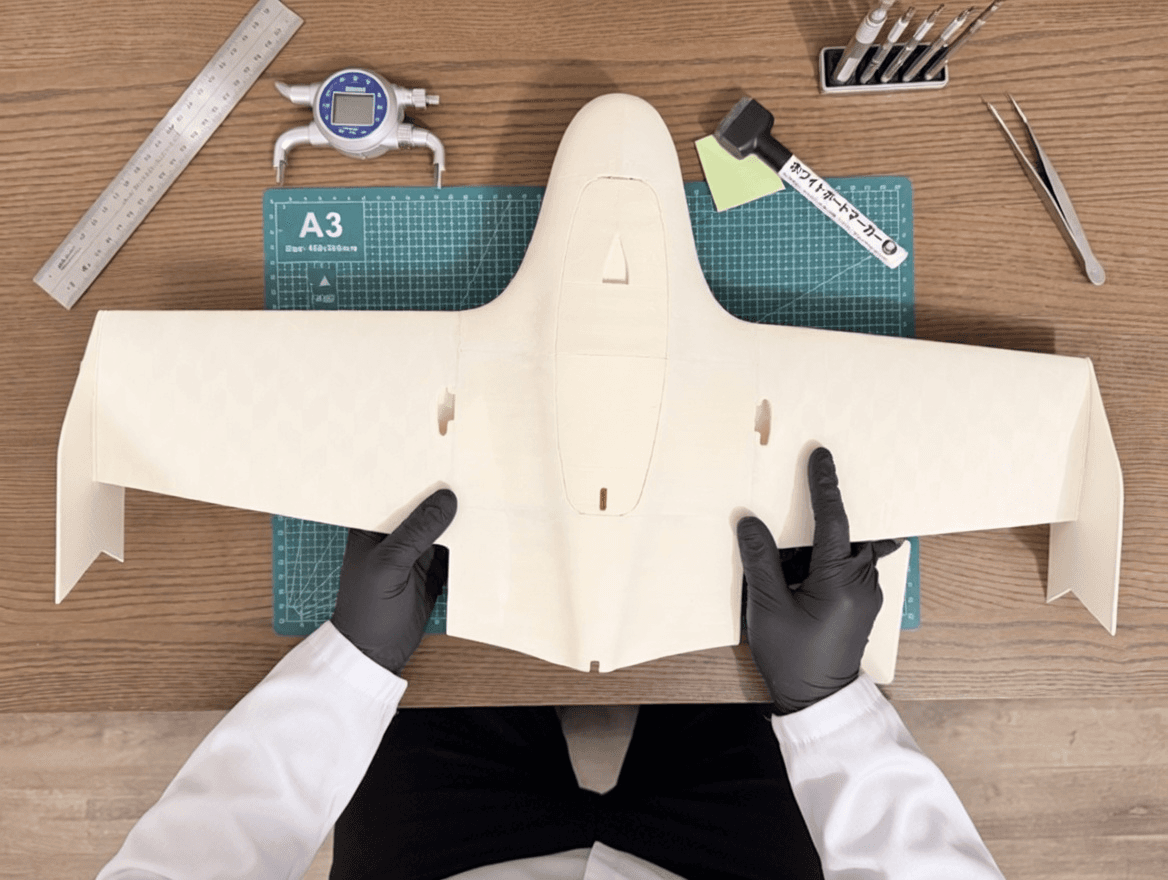
Fixed-wing drone platforms sit at the intersection of three competing demands: the structure has to be as light as possible to maximize flight time and payload capacity; it has to be produced cost-effectively enough to be practical for iterative development and scaled builds; and it has to accommodate complex internal geometries; mounts, wiring channels, payload bays - without compromising structural integrity. Optimizing for one of these alone is straightforward. Balancing all three is where most conventional manufacturing approaches fall short.
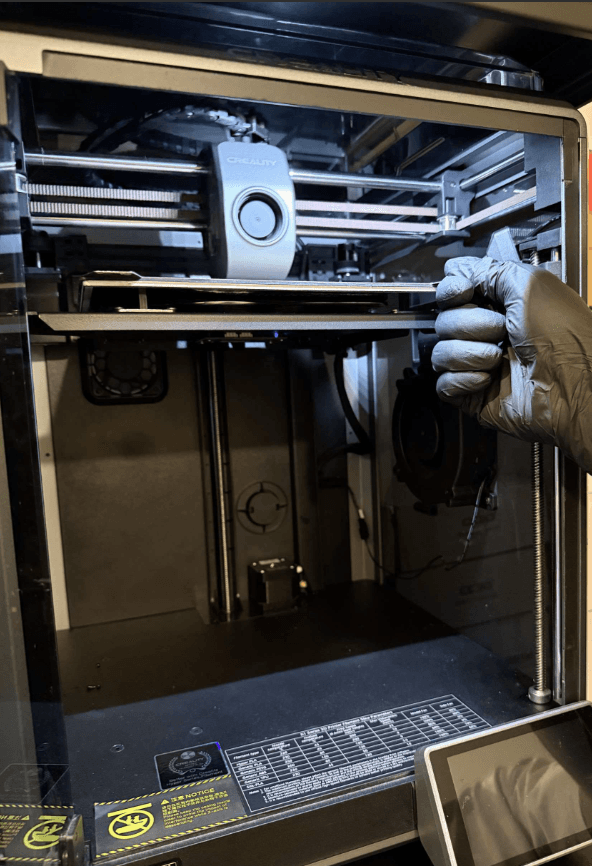
VASTARA approaches these airframes as a materials and structural engineering problem first, and a printing job second.
Engineering the Airframe
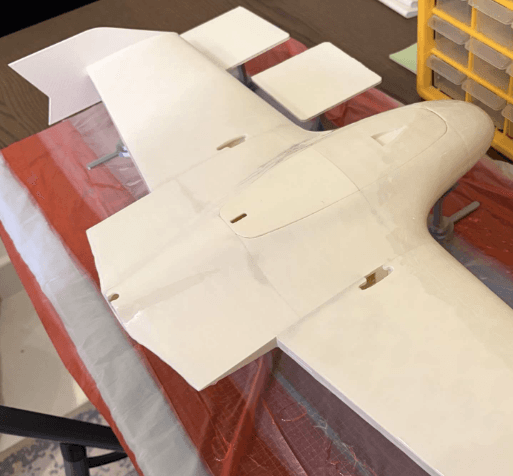
Every lightweight structure begins with Design for Additive Manufacturing (DfAM), reworking the geometry specifically to exploit what layer-by-layer manufacturing makes possible, rather than adapting a design built for conventional subtractive methods. This includes topology-informed structural layouts, internal lattice and rib strategies, and consolidating what would traditionally be multiple assembled parts into single, lighter, stronger printed structures.
Material selection is validated against VASTARA's in-house material science database, ensuring every polymer used is chosen for its actual mechanical, thermal, and weight performance; not assumptions. The result of this approach on fixed-wing structural components: an overall structure weight reduction of 20%, achieved without sacrificing the structural performance the airframe depends on in flight.
Sandwich Panel Construction
A key enabler behind this weight reduction is the use of sandwich panel composite structures, lightweight core geometries bonded between stiff outer skins, engineered to deliver high stiffness-to-weight performance across the airframe. Beyond the weight advantage, this construction approach is inherently multi-purpose: the same panel architecture can be adapted to house wiring runs, mounting points, or payload interfaces, turning what would otherwise be dead structural weight into functional, integrated space.
Why It Matters
For demanding drone applications, structure isn't just about holding a shape; it's a direct driver of flight time, payload capacity, and total program cost. By combining DfAM, validated material science, and sandwich panel engineering, VASTARA delivers airframe structures that are lighter, more cost-effective to produce and iterate on, and functionally smarter than a conventionally manufactured equivalent - engineered specifically for the constraints that matter most in demanding aerospace and defense-adjacent applications.
VASTARA Additive Manufacturing — lightweight structures, engineered on validated material science.